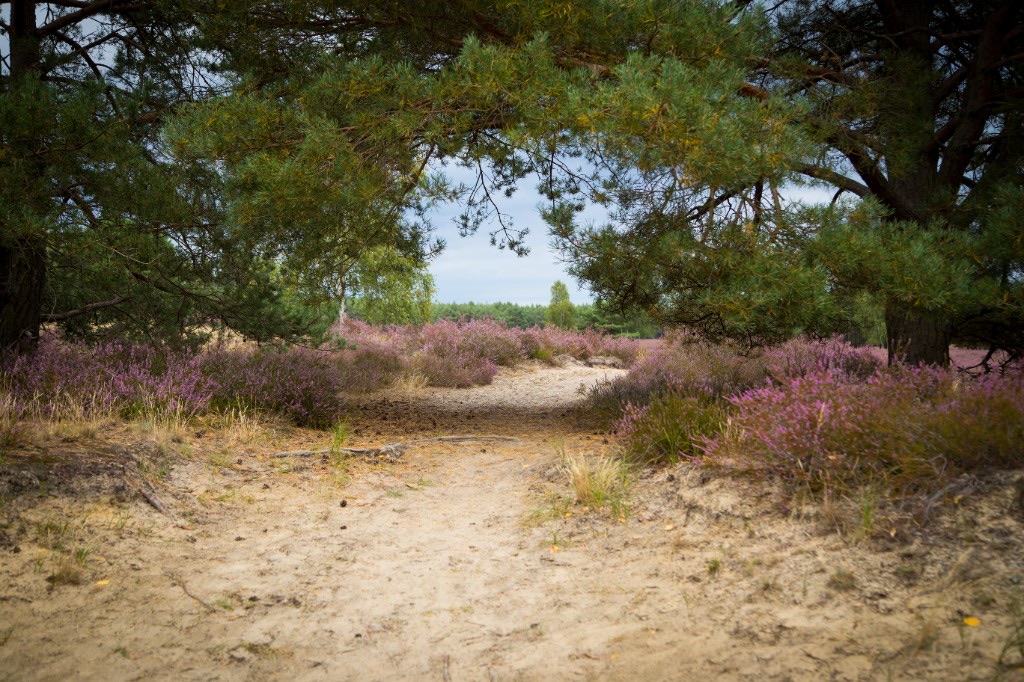
Trebel · Lüchow-Dannenberg
Here you feel the Wendland.
Wide skies, sandy paths, woods, heath and a village where school, nursery and the bus sit at the door.
Some regions have to be explained. The Wendland you notice. Space, quiet, and a landscape that belongs to ordinary days, not only to weekends.
Klein Trebeler Straße 18 sits in Trebel, at the eastern edge of Lower Saxony, in the four-state corner with Saxony-Anhalt, Brandenburg and Mecklenburg-Western Pomerania. The Elbe landscape, the Gartow forest and the Nemitzer Heide are close. So are riding trails, sand pits and woods you can walk into without packing a day bag.
Unusually practical, and very green
The primary school is about 50 metres from the front door. You do not cross a road. Kindergarten and nursery sit directly beside the plot and can be reached across the meadow at the back. The bus stop is at the door, including services towards Lüchow and Gartow.
The B493 runs through Trebel, but it is not noticeable at the house. Klein Trebeler Straße has some traffic in the morning. From the afternoon it grows much quieter. Behind the house the meadow begins. That is the first landscape of the day.
Trebel, a village with eleven hamlets
The municipality of Trebel belongs to Lüchow-Dannenberg, in the Hanoverian Wendland. Around a thousand people live here, spread across eleven villages. The main village sits at the edge of the Gartow forest. In the middle stands a fieldstone church from the twelfth century, with a timber-framed tower and a Stein organ from 1777 that is still complete.
Many of the surrounding hamlets began as Rundlinge, the circular villages that are typical of this country. Marleben, close by, still shows that form. Nemitz leads out towards the heath. A boulder between Liepe and Trebel marks the 53rd parallel. The land is flat, the paths are many, and days outside are easy: cycling, walking, riding, simply being out.
Lüchow and Gartow are a short way off for shopping, doctors and the small-town bits of life. The bus from the door makes that ordinary, not a project.
The Nemitzer Heide
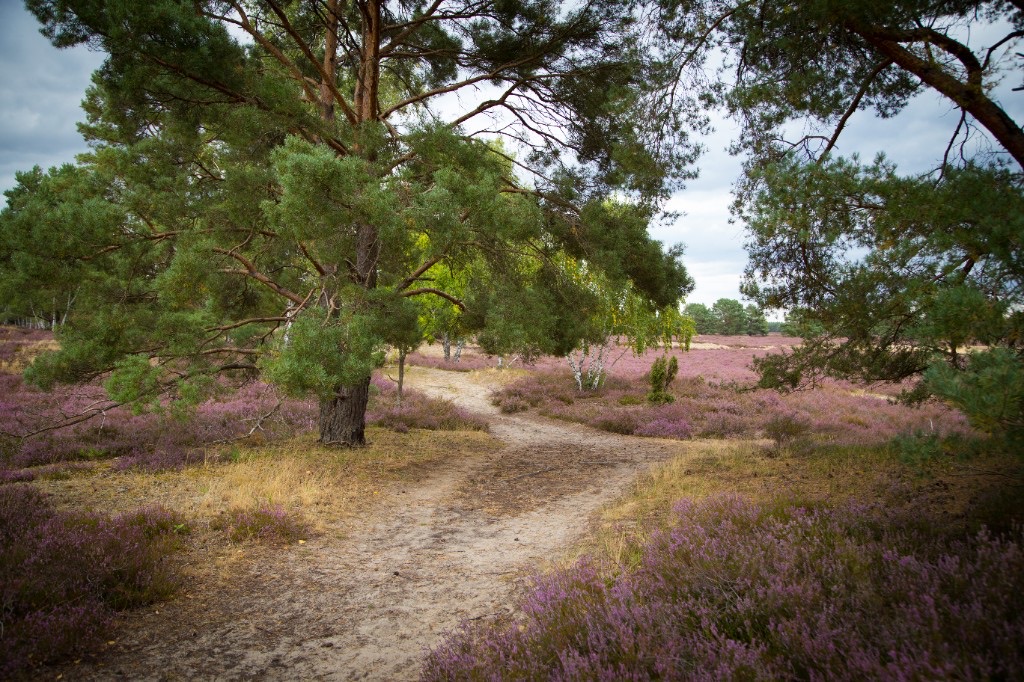
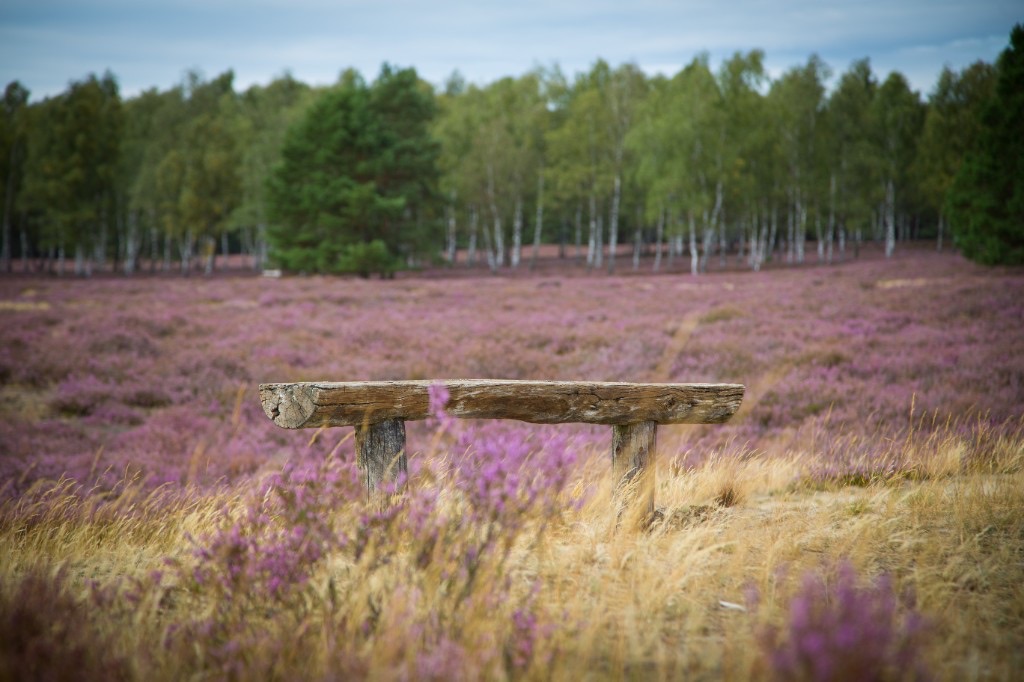
Between Trebel and Nemitz opens one of the finest landscapes of the eastern Wendland. The Nemitzer Heide covers about 550 hectares of sand, heather, birch and pine. In late summer it turns a wide violet. Wooden benches sit on the low hills. A shelter waits if rain comes. Heidschnucken graze here every day and keep the heath open.
The heath is young and old at once. In August 1975 a great fire ran through the Gartow forest. Part of the burnt ground was not replanted. Where heath had already been centuries ago, it returned. Today this is the largest sand-heath complex in the continental part of the Lower Saxon lowland, inside the Elbhöhen-Wendland nature park. Woodlarks and nightjars breed here, among other shy birds of open country.
Marked paths run for kilometres. Riders find paddocks and water. From the Nemitzer Heidehaus, on the road between Trebel and Nemitz, a café, a playground and the exhibition "Fire, heath, new life" tell how ice, fire and grazing shaped this ground. On the last weekend in August the Heideblütenfest fills the place. The heath is worth a walk in every season, including winter.
Woods, sand and the long view
Anyone who knows the Wendland knows that its quality of life is hard to put into kilometres. Beside the heath lie the Bernstorff forests, riding trails and the sand pits that belong to this country. Cycling, walking, mushrooming or standing still in a wide field are not attractions here. They are the texture of the week.
The land is kind to movement. Few hills, firm village lanes, field tracks. You can ride out from the courtyard and be in open country before the coffee cools.
A region that makes things
The Wendland is more than quiet. Between Ascension and Pentecost, farms, studios and workshops across Lüchow-Dannenberg open for the Kulturelle Landpartie. Art, craft, music and conversation travel from village to village, often by bicycle. Through the year the Rundlinge, timber-frame yards and the Elbe landscape keep a culture of making, keeping and looking after land.
That is the point of living here. Not a postcard. A place with room for family, animals, work with the hands, and the kind of neighbours who still stop.
And then there is the house itself.
Oak timber frame, about 200 m² of living space, 3,315 m² of ground and a large barn. In Trebel, with the Wendland at the door.